
Standing water
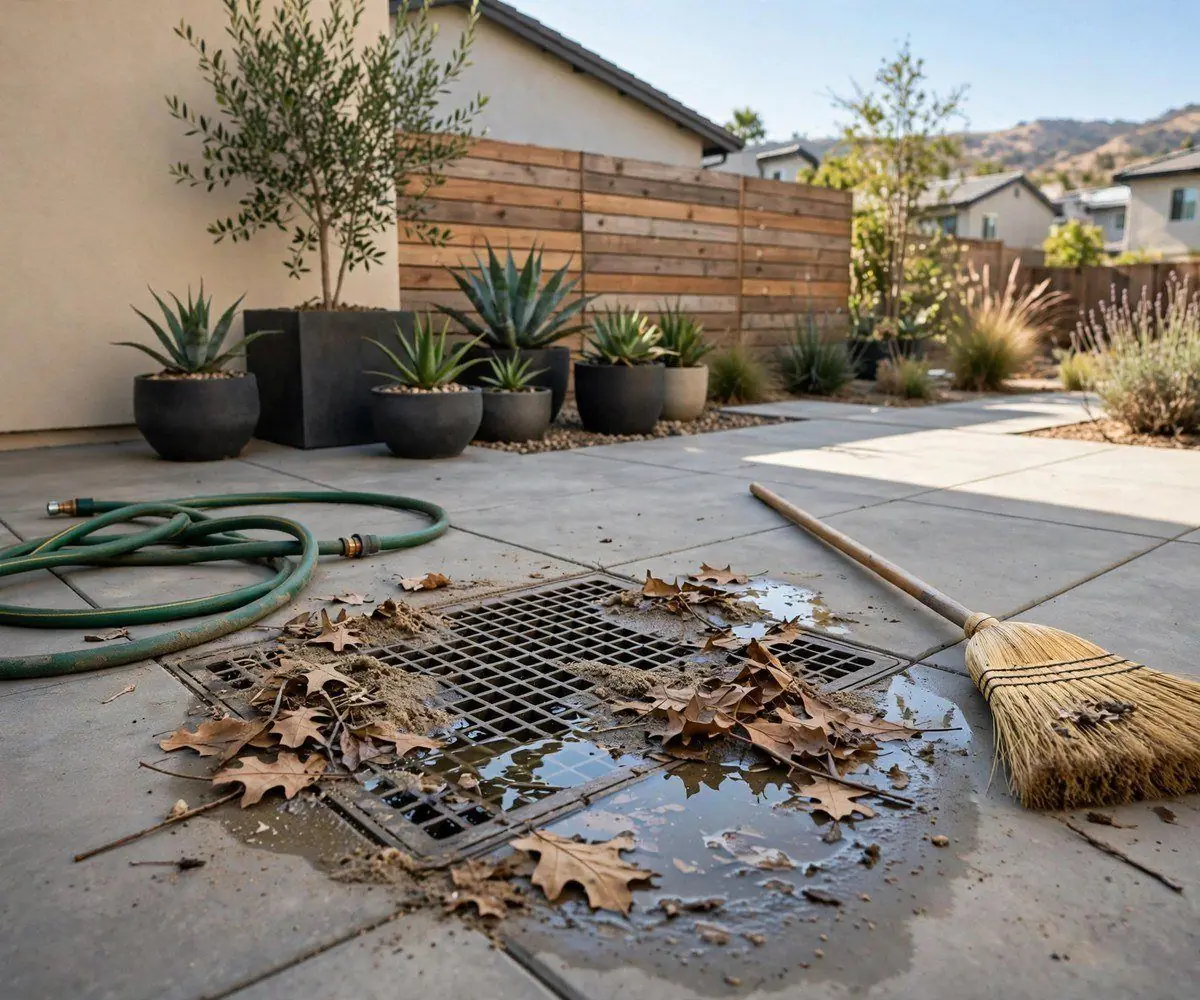
Puddles remain on a patio, deck, or driveway for hours after use.
Outdoor drain cleaning clears patio, pool deck, driveway, and yard drains that hold standing water. Call (562) 581-6065 if water pools near your home after rain or irrigation. Harbor Drain Cleaning gives you a written quote that names the drain type and the method.
Last updated:
The basics
Outdoor drain cleaning is the removal of leaves, soil, sediment, and roots from drains that carry water away from patios, pool decks, driveways, planters, and yards. The plumber clears the grate, cleans the pipe, and tests the drain with a hose.
Outdoor drains are usually 3 or 4 inches (7.6 or 10 cm) wide and sit in low points where water collects. They fill with leaves, sand, and mud faster than indoor drains. A drain that is half full of silt may seem to work until heavy rain.
Because outdoor drains carry runoff, they connect to a different system from indoor drains. Some tie to a downspout or storm line, as described in storm drain cleaning. The plumber traces the line first so cleaning does not push debris into the wrong place.
When to call
A blocked outdoor drain shows itself when water sits on the surface long after rain or irrigation. Puddles on the patio, water against the foundation, and muddy overflow around a grate all show that the drain cannot carry the flow.
Puddles remain on a patio, deck, or driveway for hours after use.
Water bubbles up around the drain cover.
Water pools along the house wall, which can damage the structure.
Running a hose for a minute raises the level instead of draining.
The process
Outdoor drain cleaning takes five steps. The plumber removes the grate, clears the debris by hand, runs a cable or water jet through the line, traces where the pipe exits, and tests with a hose. Tracing prevents pushing debris into a pipe that cannot take it.
The cover comes off so the basin and pipe are visible.
Leaves, silt, and trash come out by hand or with a vacuum.
A cable or a water jet clears the pipe leaving the drain.
The plumber confirms where the line discharges.
A hose runs for several minutes to show the drain flowing freely.
Details that matter
Outdoor drains vary by location and purpose, and each type clogs for a different reason. Knowing which type you have helps the plumber pick a tool and warns you about where the water goes. Four types cover most Norwalk properties.
These collect irrigation and splash-out water. Sand and leaves clog them fast. Pool deck drains should not carry pool chemicals into the wrong system, so confirm where yours discharges.
A drain at the bottom of a sloped driveway catches runoff. Mud, mulch, and leaf litter fill it. Clearing it before the rainy season prevents water entering the garage.
A French drain is a perforated pipe in gravel that moves groundwater. Roots and silt block the holes, and jetting can restore flow. Some lines are too old or crushed to clean.
Utility area drains next to the house may tie into the indoor system. If so, see floor drain cleaning.
Cost factors
Outdoor drain cleaning costs less when the clog sits at the grate and more when the pipe is long, buried, or blocked by roots. Hydro jetting a French drain costs more than clearing leaves from a basin. The number of drains also affects the total.
| Outdoor factor | Lower cost when | Higher cost when |
|---|---|---|
| Clog location | At the grate or basin | Deep in a buried line |
| Debris | Leaves and silt | Roots or crushed pipe |
| Method | Hand cleaning and a hose | Cable or hydro jetting |
| Drain count | One drain | Several drains on one property |
| Access | Open yard | Under concrete or planters |
Outdoor drain prices follow debris and access. Read these ranges as tendencies, and request a written quote after the plumber sees the drain.
In Norwalk
Southern California gets most of its rain from late fall through early spring, and drains clogged by dry-season leaves and dust can overflow quickly in a heavy storm. Clearing outdoor drains in the fall helps water leave the property instead of reaching the garage or foundation.
The City of Norwalk bars disposal of food waste into storm drains, and the same care applies to private yard drains. Rinse only clean water into outdoor drains, and keep soil, oil, and chemicals out of them.
Crews handling outdoor drain cleaning work the whole city. Look at the coverage page to see which streets, parks, and landmarks are on the route map.
Straight answers
Leaves, sand, and mud settle in the basin and pipe. Roots can also enter older pipe. A cleaning with a cable or jet clears it. If it keeps backing up, a camera shows whether the pipe is crushed.
Yes. Lift the grate, remove debris by hand, and flush with a hose. A garden hose with a jet nozzle clears light silt. Call a plumber if the water still pools after flushing for several minutes.
Usually not. Most outdoor drains lead to a storm line, a dry well, or the street. Some utility area drains connect to the sewer, so ask a plumber to trace the line before you pour anything down.
Check them before the rainy season and after large storms. Drains under trees or near open soil may need a cleaning every year. Others can go two or three years.
References
Ready to fix it?
Call about a patio, driveway, or yard drain that holds water and get a written quote first.
(562) 581-6065