
Several slow drains
Sinks, tubs, and toilets slow down together instead of one at a time.
Main drain cleaning clears the pipe that carries wastewater from every fixture out of your home. Call (562) 581-6065 if two or more fixtures drain slowly or water backs up in the lowest drain. Harbor Drain Cleaning gives you a written quote that names the machine and the cleanout.
Last updated:
The basics
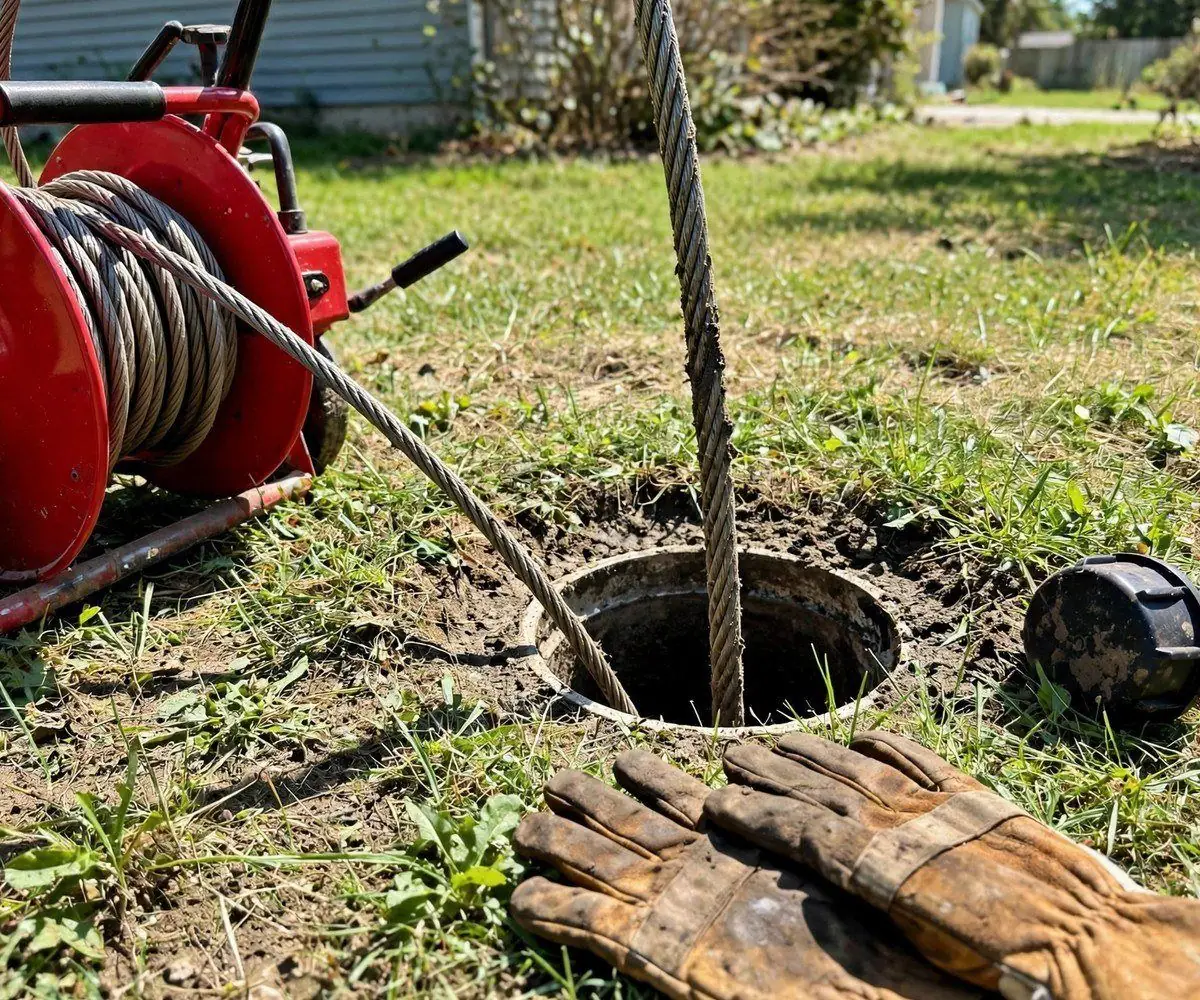
Main drain cleaning is the removal of a blockage from the main line, the large pipe that collects wastewater from every fixture and sends it toward the sewer lateral. The plumber feeds a cable machine or a water jet through a cleanout to break up the clog and scrape the pipe wall.
A main drain is usually 3 or 4 inches (7.6 or 10 cm) wide and slopes about 1/4 inch per foot (2 cm per meter) toward the sewer. Because every fixture joins it, one blockage affects the whole house. The lowest drain, often a tub or floor drain, backs up first.
The main line ends at the sewer lateral, which runs to the city sewer main. If the clog is past your property line cleanout, sewer line cleaning covers that section, and a camera inspection shows where the blockage sits.
When to call
A clogged main drain shows up in several fixtures at once. Two or more drains slow down, the toilet gurgles when you run the washing machine, or water appears in the lowest tub or floor drain. These signs separate a main line problem from a single clogged sink.
Sinks, tubs, and toilets slow down together instead of one at a time.
Air pushed by draining water escapes through the toilet bowl.
Water rises in a floor drain or ground-level tub first.
Odor rises from drains and the cleanout when the line is blocked.
The process
Main drain cleaning has five steps. The plumber locates the cleanout, feeds a cable machine or water jet down the main line, clears the clog, scrapes the pipe wall, and tests every fixture. A camera check at the end confirms the pipe is clear.
The plumber uncaps the main cleanout, a capped pipe near the house or in the yard.
A cable machine, 3/4 inch (19 mm) or larger, travels down the line to the blockage.
Rotating blades cut the clog, or a water jet washes it out of the pipe.
A second pass cleans the buildup so the clog does not close again.
Water runs in every drain while the plumber watches the cleanout for flow.
In Norwalk
In Norwalk, the property owner is responsible for the main drain and the sewer lateral to the city main. The City of Norwalk Sewer Policy states that the owner is solely responsible for the private lateral, including sections under sidewalks, curbs, and streets.
The city uses a private contractor to clean public sewer lines and takes overflow reports at (562) 929-5511. If a plumber finds the clog in the public main, call that number so the city can clear it.
Planning main drain cleaning? The Norwalk areas we cover list the three ZIP codes and the main roads, so you can match your address before you dial.
Cost factors
Main drain cleaning costs more than a single sink cleaning because it needs a larger machine and access through a cleanout. Roots, a long line, or no cleanout push the price higher. A camera inspection adds cost but shows what the cleaning cannot.
| Main drain factor | Lower cost when | Higher cost when |
|---|---|---|
| Access | A cleanout is available | No cleanout, so a toilet must be pulled |
| Cause | Paper or soft debris | Roots, grease, or a damaged pipe |
| Method | Cable machine | Hydro jetting |
| Line length | Short run to the street | Long run or a second building |
| Inspection | Not needed | Camera inspection included |
Main drain pricing moves with machine size and access. Read these ranges as tendencies, and ask the plumber for a firm written price.
Details that matter
A main drain clogs for four common reasons: tree roots, grease, flushed items, and pipe damage. Each cause calls for a different tool and a different follow-up. Knowing the cause helps you decide whether a cleaning is enough or whether the pipe needs a camera check or repair.
Roots enter through joints and cracks and grow into hair-thin webs that catch paper and debris. Roots return unless the pipe is repaired. See tree root removal.
Grease from kitchens cools in the main line and holds wipes and food solids. Hydro jetting washes the pipe wall clean in a way a cable cannot.
Wipes, paper towels, and feminine products catch on rough pipe joints. A bellied or cracked pipe holds water and debris in the same spot. A sewer line repair may be needed if cleaning does not last.
Straight answers
Test several fixtures. If two or more drain slowly, or if water rises in the lowest drain when you run another fixture, the main line is blocked. One slow fixture points to a branch line instead.
Not safely. Main line cleaning needs a machine with a rotating cable and the skill to avoid damaging the pipe. A homeowner plunger will not clear a main line clog, and rented machines can break old pipe.
Yes, if sewage backs up into the home. Stop using water and call a plumber, because every flush and shower adds to the backup. A slow main line with no backup is urgent but not an emergency.
Most main drains need cleaning only when they clog. Homes with mature trees, older clay or cast iron pipe, or a history of backups benefit from cleaning every 18 to 24 months and a camera check.
References
Ready to fix it?
Call when several fixtures drain slowly at once and ask for a written quote for main drain cleaning.
(562) 581-6065