
Repeat main line clogs
The main drain clogs again within months of a cleaning.
Tree root removal cuts roots out of the sewer line so wastewater flows again. Call (562) 581-6065 if the main drain keeps clogging or the sewer line backs up. Harbor Drain Cleaning gives you a written quote, and a camera check shows where the roots entered.
Last updated:
The basics
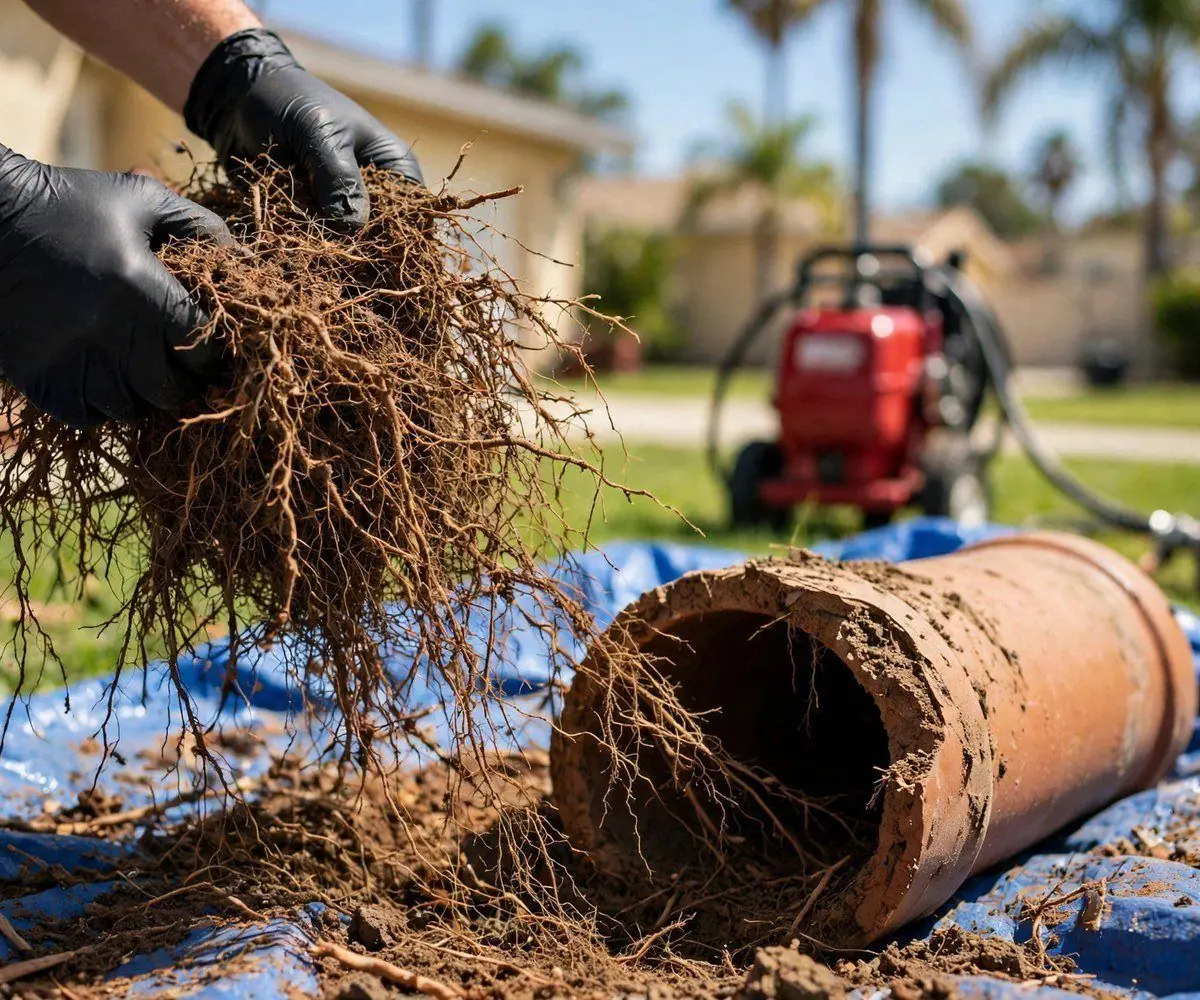
Tree root removal is the cutting and clearing of roots that have grown into a sewer line through cracks and joints. The plumber feeds a cable machine with cutting blades or a water jet through a cleanout, removes the roots, and checks the pipe for the openings that let them in.
Roots seek water and nutrients. A sewer line leaks tiny amounts of moisture at joints, so roots find the opening and grow inside the pipe. A root as thin as a hair, 0.04 inch (1 mm), can enter a joint and thicken into a mass that blocks a 4-inch (10 cm) line.
Cutting removes the roots but not the cause. If the pipe stays cracked, roots return, often within 6 to 18 months. A camera inspection shows the damage, and sewer line repair stops the roots for good.
When to call
Tree roots in a sewer line cause repeat clogs, slow drains that clear and return, and gurgling from toilets and tubs. A yard with large trees over the sewer line and a main drain that clogs more than once in a year are the strongest clues.
The main drain clogs again within months of a cleaning.
Toilets and tubs gurgle as roots restrict the flow.
Lush grass over the line can mean a leak feeding the roots.
Large trees within 10 to 20 feet (3 to 6 meters) of the line raise the risk.
The process
Tree root removal takes five steps. The plumber confirms roots with a camera, cuts them with a cable machine or jets them out, cleans the pipe wall, checks the pipe again, and explains repair options. The camera check before and after is what separates a lasting result from a short one.
A camera shows root location, mass, and the entry points.
A cable with a cutting head chops through the mass.
A water jet washes the cut roots and debris out of the line.
A second pass shows the pipe wall, any cracks, and the entry points.
The plumber explains whether the pipe needs repair or regular root control.
Details that matter
Yes, roots usually come back after cutting unless the pipe is repaired. Cutting removes the visible mass, but the root tips stay in the soil and keep growing toward the same joint. Three options control regrowth, and the right one depends on the pipe condition.
If the pipe is sound but has a loose joint, cutting or hydro jetting every 12 to 24 months keeps roots in check. This is the lowest-cost path but needs a schedule.
If the camera shows one or two cracks, a spot repair or a cured-in-place liner seals the opening. Roots cannot enter a sealed pipe. See sewer line repair and trenchless options.
Old clay and Orangeburg pipe often has many joints and cracks. Replacing the pipe removes the problem entirely but costs the most.
Cost factors
Tree root removal costs more than a standard drain cleaning because the job needs a bigger machine and often a camera. The mass of roots, the length of the line, and the pipe condition set the price. Repair after cutting is a separate cost.
| Root factor | Lower cost when | Higher cost when |
|---|---|---|
| Root mass | Light, thin roots | Dense mass across several joints |
| Access | Cleanout available | No cleanout, long line |
| Method | Cable cutting | Cable plus hydro jetting |
| Camera | Check only after cutting | Before and after, with recorded video |
| Follow-up | None needed | Spot repair, lining, or replacement |
Root work costs more because roots return. These ranges are patterns, so ask for a written quote that names the cutter and the follow-up.
In Norwalk
Norwalk's yard and street trees can send roots toward the sewer lateral. The City of Norwalk Sewer Policy states that roots can enter a broken private lateral, and the owner is responsible for the lateral, including sections under sidewalks and streets.
If a city street tree is the likely source, still start with a camera video and call Norwalk Public Services at (562) 929-5511. The lateral repair itself stays with the owner under the city's policy.
Not sure your block is on the tree root removal route? The service area guide names the roads and ZIP codes, and a call settles any doubt.
Straight answers
Yes. Roots enter through small cracks and joints and grow inside the pipe. Over time they can widen the opening, hold debris, and in old pipe cause collapse. A camera shows how much damage exists.
It varies. Roots can start a clog in months and build a full blockage in 1 to 3 years. Older clay and cast iron pipe with open joints clogs faster than modern plastic pipe.
Foaming root killers can slow regrowth when used with a plumber's cutting, but they do not repair the pipe. Ask the plumber whether a root treatment fits your line before buying one.
Not before a camera inspection. Removing a tree may not help if roots already sit inside the pipe, and the stump can keep growing. Repair the pipe first, then decide about the tree with an arborist.
References
Ready to fix it?
Call about repeat sewer clogs and ask whether the quote covers root cutting, jetting, and a camera check.
(562) 581-6065