
Weak flush
The bowl empties slowly or only half the water leaves.
Toilet clog repair clears a toilet that will not flush or that overflows. Stop the water first, then call (562) 581-6065 if plunging fails. Harbor Drain Cleaning gives you a written quote, and the plumber checks whether the clog sits in the toilet or the main line.
Last updated:
The basics
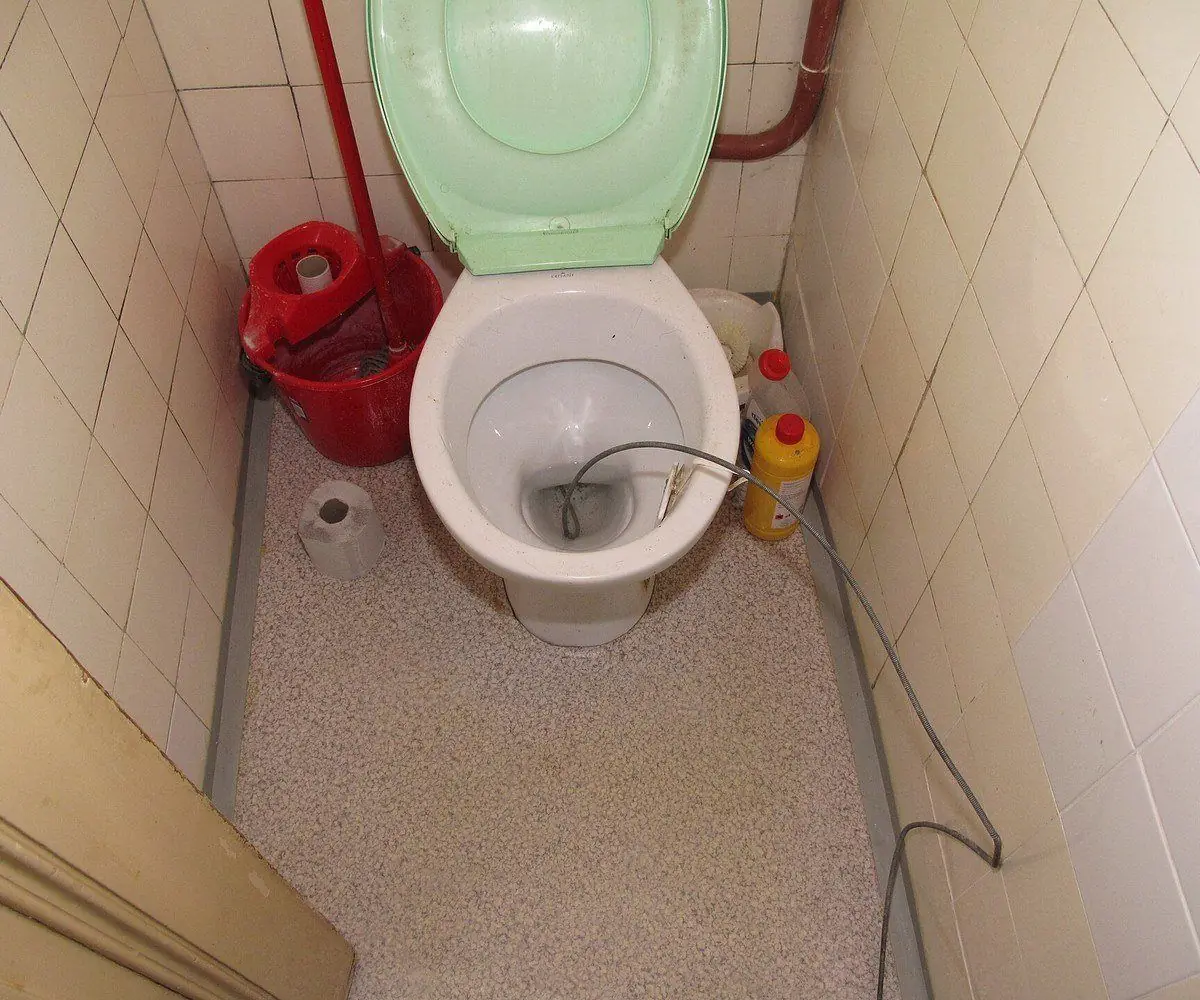
Toilet clog repair is the removal of a blockage from the toilet trap or the drain line behind it so the toilet flushes at full strength. The plumber uses a closet auger or a drain cable, then flushes several times to confirm the water leaves quickly.
Most toilet clogs form in the trap, a curved channel about 2 inches (5 cm) wide inside the toilet base. Too much toilet paper, wipes, and small objects stop there. A closet auger, about 3 feet (90 cm) long, reaches the trap without scratching the porcelain.
If the toilet clears but a nearby sink or tub gurgles, the clog sits in the main line, not the toilet. Main line clogs need a larger machine, as described in main drain cleaning.
When to call
A clogged toilet announces itself in several ways: the bowl fills higher than normal, the flush is weak, and water swirls but does not leave. A gurgle from the toilet when another fixture drains also shows that the clog sits in the drain line.
The bowl empties slowly or only half the water leaves.
Water climbs toward the rim after a flush and does not drop.
Air bubbles up through the bowl when a shower or sink drains.
More than one toilet backing up means the main line is blocked.
The process
A toilet clog repair has five steps and usually takes under an hour. The plumber starts with the least invasive tool and moves to a cable only if the closet auger does not clear the trap. Floors and the toilet base are protected throughout.
Closing the supply valve behind the toilet prevents the bowl from overflowing.
The auger feeds through the trap and breaks up or retrieves the clog.
If the bowl still drains slowly, a cable runs through the toilet drain line.
Several flushes confirm that the bowl empties fast and the water level settles.
Spilled water is wiped up, and the toilet is checked for leaks at the base.
In Norwalk
In Norwalk, the property owner is responsible for the toilet, the drain line, and the sewer lateral to the city main. If a backup comes from the street main, the City of Norwalk Public Services Department at (562) 929-5511 handles the public side.
A plumber can tell where the blockage sits by testing other fixtures and, when needed, running a camera. Knowing the location decides who repairs it, so ask the plumber to record what the camera shows.
Crews handling toilet clog repair work the whole city. Look at the coverage page to see which streets, parks, and landmarks are on the route map.
Cost factors
Toilet clog repair costs less when a closet auger clears the trap and costs more when the plumber must pull the toilet or run a machine through the line. A foreign object in the trap or a main line clog adds time, and after-hours calls raise the price.
| Toilet factor | Lower cost when | Higher cost when |
|---|---|---|
| Clog location | In the toilet trap | In the drain line behind the toilet |
| Cause | Toilet paper | A toy, wipes, or tree roots |
| Tool | Closet auger | Cable machine or toilet removal |
| Scope | One toilet | Several fixtures |
| Timing | Daytime | Night or weekend emergency |
Toilet prices stay low for a simple clog and rise when the toilet must be pulled. Ask for the price in writing before the plumber lifts it.
Details that matter
While you wait for a plumber, stop the water, avoid flushing again, and keep people and pets away from any overflow. These steps keep a small clog from turning into a flooded bathroom, and they cost nothing. Three actions matter most.
Turn the oval handle behind the toilet clockwise. The tank stops refilling, so a stuck flush cannot send more water into the bowl.
A flange plunger has a rubber extension that seals the toilet drain. Push slowly three times, then pull sharply. If the clog does not move after two rounds, wait for the plumber.
If water rises in a shower or tub when you flush, stop using every fixture. That pattern means the main line is blocked, and sewer backup cleanup or emergency drain cleaning applies.
Straight answers
No. Flushing again can overflow the bowl. Wait about 10 minutes to see if the water level drops, and close the supply valve if it keeps rising. Then use a plunger or call a plumber.
No. A plunger clears most paper clogs but not a toy, a wipe wad, or a clog in the drain line. If two rounds with a flange plunger fail, the clog needs an auger or cable.
No. Wipes labeled flushable do not break down like toilet paper and can wrap around other debris. They are a leading cause of toilet and main line clogs, so put them in the trash.
A clogged toilet becomes an emergency when sewage rises from a floor drain, shower, or tub, or when the toilet overflows and will not stop. Shut off the water supply and call a plumber right away.
References
Ready to fix it?
Call about a clogged toilet and ask whether the quote covers an auger, a closet-flange check, and a flush test.
(562) 581-6065