
Standing water
Water stays on the floor around the grate long after the surface dries elsewhere.
Floor drain cleaning clears garage, laundry, and basement floor drains that back up, hold water, or smell. Call (562) 581-6065 if water rises from a floor drain. Harbor Drain Cleaning gives you a written quote, and sewage in a floor drain is treated as urgent.
Last updated:
The basics
Floor drain cleaning is the removal of sediment, debris, and buildup from a floor drain and the trap beneath it. A floor drain collects water from the floor surface and from nearby fixtures, so a blocked drain lets water pool on the floor or sewage rise from the line.
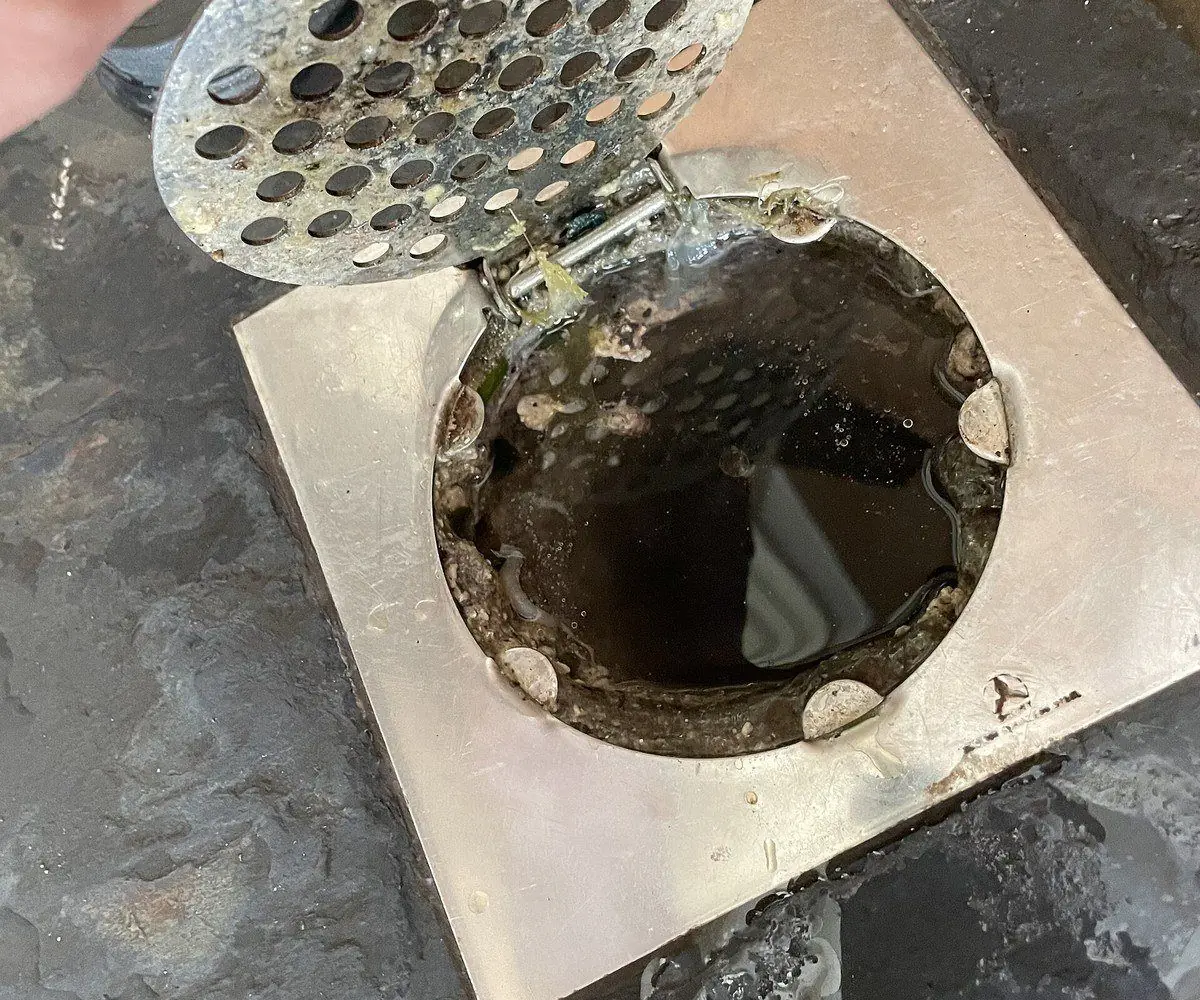
A floor drain usually has a 2 to 4 inch (5 to 10 cm) opening with a removable grate. Under the grate sits a trap that holds a water seal, which blocks sewer gas. If the seal dries out, the drain smells. If sediment fills the trap, the drain backs up.
A floor drain that backs up when other fixtures drain is connected to the main line. That case is a sewer issue, covered in sewer backup cleanup, not just a floor drain problem.
When to call
A blocked floor drain shows up as standing water on the floor, a sewer smell near the grate, or water that rises when the washing machine or a shower drains. Each sign points to a different cause, so the plumber starts by learning when the drain acts up.
Water stays on the floor around the grate long after the surface dries elsewhere.
The trap seal has dried, or debris in the trap is rotting.
Water rises when the washer or a shower drains, which points to the main line.
A hose test takes minutes to drain instead of seconds.
The process
Floor drain cleaning takes five steps. The plumber removes the grate, clears sediment from the trap, runs a cable through the drain line, and tests with water. If the water rises from deeper in the line, the plumber stops and checks the main drain.
The cover lifts off so the trap and pipe are visible.
Sediment, sand, and debris come out by hand or with a wet vacuum.
A cable passes through the drain line to break up buildup past the trap.
Water poured into the trap restores the seal that blocks sewer gas.
A hose runs for several minutes while the plumber watches the drain speed.
Details that matter
A floor drain smells or backs up for one of three reasons: a dry trap seal, a clog in the line, or a problem in the main sewer. Identifying the cause tells you whether a simple fix is enough. The plumber tests each reason in order, starting with the simplest.
Floor drains that rarely see water lose their water seal to evaporation in a few weeks. Pouring a quart (1 liter) of water into the drain restores the seal. A teaspoon of mineral oil on top slows evaporation.
Sand, laundry lint, and soap collect in the line beyond the trap. A cable cleaning clears it, and laundry drain cleaning covers the connected washer line.
If water rises in the floor drain when you flush a toilet or run a shower, the main line is blocked. Stop using water and see main drain cleaning. Hydro jetting clears heavy buildup in that case.
Cost factors
Floor drain cleaning costs less when the problem is sediment in the trap and costs more when the clog sits in the main line. Access to the grate, the number of connected fixtures, and the type of debris all affect the time and the tool.
| Floor drain factor | Lower cost when | Higher cost when |
|---|---|---|
| Cause | Sediment in the trap | Clog in the main line |
| Access | Removable grate | Rusted or cemented grate |
| Debris | Sand and lint | Roots or grease |
| Method | Hand cleaning and cable | Cable machine or hydro jetting |
| Follow-up | None | Camera inspection |
Floor drain prices follow the trap condition and the line behind it. These ranges show direction, so confirm the price after the plumber looks inside.
In Norwalk
In Norwalk, a floor drain inside a home connects to the private sewer system, so the owner maintains it up to the city main. The City of Norwalk Sewer Policy states the owner is solely responsible for the lateral, including the portion under sidewalks and streets.
Garage floor drains need extra care because oil, paint, and chemicals should not enter the sewer. If a drain handles anything other than clean water, ask the plumber how to keep it from carrying those materials.
Not sure your block is on the floor drain cleaning route? The service area guide names the roads and ZIP codes, and a call settles any doubt.
Straight answers
A dry trap is the most common reason. Pour about a quart (1 liter) of water into the drain to restore the seal. If the smell returns within days, the trap or the line has a leak or a clog that needs a plumber.
No. Heavy rain can overload the public sewer and push water up through low drains. If a floor drain backs up only during storms, ask a plumber about a backwater valve and call the city to report the main.
Yes. Sediment, sand, and lint collect in the trap over time. A floor drain that sees little use can also clog with debris that falls through the grate. A cleaning every year or two prevents it.
Yes. Sewage in a floor drain means wastewater is moving backward through the line. Stop using water, keep people away from the area, and call a plumber right away.
References
Ready to fix it?
Call about a garage, laundry, or basement floor drain that backs up or smells and ask for a written quote.
(562) 581-6065