
Plunger fails
A plunger or hand tool cannot move the clog after two tries.
Drain snaking uses a coiled cable to break through a clog, and power rodding uses a motorized cable for longer or tougher lines. Call (562) 581-6065 if a drain is blocked. Harbor Drain Cleaning gives you a written quote that names the cable size and machine.
Last updated:
The basics
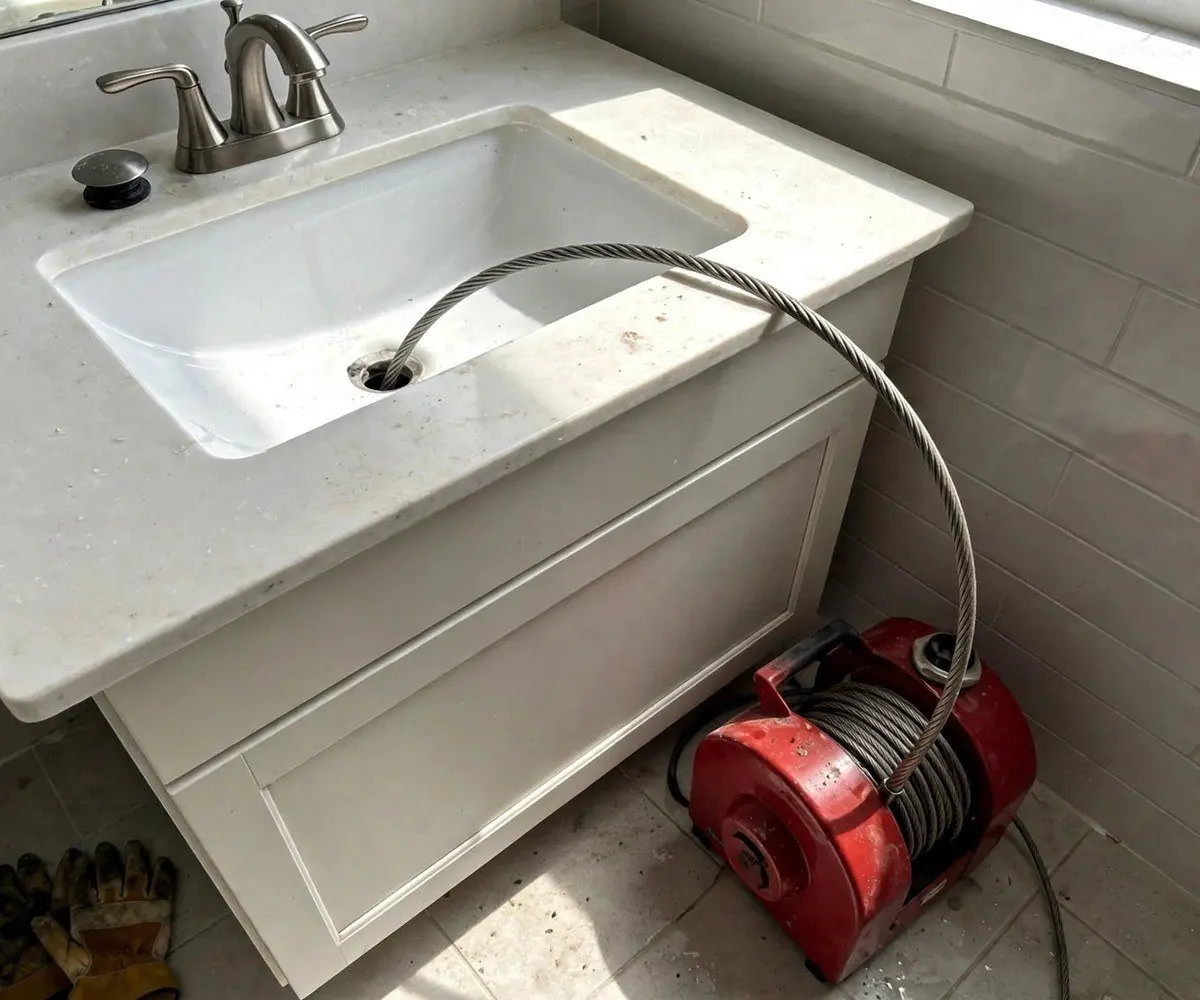
Drain snaking is a drain cleaning method that pushes a flexible steel cable through a pipe until it hits the clog, then breaks it or pulls it out. The cable can be a hand-crank drain snake for sinks or a motorized machine, called power rodding, for longer lines.
Cable size matches the pipe. A hand auger with a 1/4-inch (6 mm) cable fits a sink, while a machine with a 5/8- to 3/4-inch (16 to 19 mm) cable serves a 3- or 4-inch (7.6 or 10 cm) main line. A rotating cutting head chops roots and soft clogs as it spins.
Snaking opens a path through the clog and often leaves some buildup on the wall. If a clog returns within weeks, hydro jetting cleans the pipe wall more fully. Snaking remains the faster and cheaper first step for many clogs.
When to call
Drain snaking is the right choice for a single stubborn clog, a clog that a plunger cannot move, or a blockage caused by a solid object. It also suits older pipes that cannot take high-pressure water. A plumber chooses it by listening to the symptoms.
A plunger or hand tool cannot move the clog after two tries.
One sink, tub, or toilet is blocked while others drain.
A toy, wipe, or hair mat blocks the line.
The pipe is too fragile for high-pressure water.
The process
Drain snaking takes five steps and usually finishes in under an hour for a fixture drain. The plumber selects a cable, feeds it in until it meets the clog, cuts or hooks the blockage, pulls the cable out, and flushes the line to test.
Cable thickness and cutting head match the pipe size and the clog.
The cable advances through the trap or a cleanout until it stops.
Rotation cuts roots or soft clogs, and a hook retrieves hard objects.
The cable comes out while the plumber wipes the debris away.
Hot water runs through, and the plumber checks the flow speed.
Details that matter
A drain snake is a manual or small motorized cable, and power rodding is a heavy-duty machine that spins a thicker cable at high speed. The difference lies in reach, power, and the clog type, and a plumber picks the one that fits your pipe without damaging it.
A hand auger, 25 feet (7.6 meters) or less, clears a sink, tub, or toilet trap. It is quick and precise, and it does not stress the pipe. See kitchen sink drain cleaning for typical uses.
A drum machine with 75 to 100 feet (23 to 30 meters) of cable clears a main line or lateral. The spinning head cuts roots and grease. Power rodding needs a cleanout and a plumber with experience, because a wrong head can catch on a joint.
If the cable stops at the same spot repeatedly, a camera shows whether the pipe is cracked or offset. In that case, more rodding will not fix the problem.
Cost factors
Drain snaking costs less than hydro jetting and often less than a repair. The price depends on the fixture, the length of cable needed, and the cause of the clog. Reaching a clog through a cleanout is quicker and cheaper than pulling a toilet to get access.
| Snaking factor | Lower cost when | Higher cost when |
|---|---|---|
| Fixture | Sink or tub | Main line or sewer lateral |
| Cable length | Under 25 feet (7.6 meters) | 75 feet (23 meters) or more |
| Cause | Hair or paper | Roots or a foreign object |
| Access | Trap or cleanout | Toilet removal |
| Timing | Daytime | Night or weekend |
Snaking is usually the lowest-cost method. Use these ranges for direction, and ask for a written quote that names the cable and the line.
In Norwalk
In Norwalk, the property owner owns the lateral and pays for each cleaning, so a cable is the first and lowest-cost step for many clogs. The City of Norwalk Sewer Policy puts the lateral under the owner's responsibility, including the part under the street.
If a cable clears the clog but the problem returns, ask the plumber to compare snaking with clogged drain repair options that clean the pipe wall. A recorded camera pass shows why the clog keeps returning.
Planning drain snaking and power rodding? The Norwalk areas we cover list the three ZIP codes and the main roads, so you can match your address before you dial.
Straight answers
Yes, when the plumber matches the cable to the pipe. A cable of the right size and a gentle touch do not harm sound pipe. Old, cracked, or corroded pipe can catch the cable, so a camera helps.
A fixture drain takes 30 to 60 minutes. A main line takes 1 to 2 hours, depending on access and how much debris the cable meets. The plumber can estimate after hearing which fixtures are affected.
Terms overlap. A drain snake is a flexible cable for most clogs, and an auger usually means a tool with a corkscrew tip. A closet auger is built for toilets and has a protective sleeve.
Not always. A cable opens the clog but may leave buildup on the pipe wall. If clogs return within a few weeks, ask about hydro jetting or a camera inspection to find the cause.
References
Ready to fix it?
Call to book drain snaking and ask for a written price that names the cable size and the line.
(562) 581-6065